
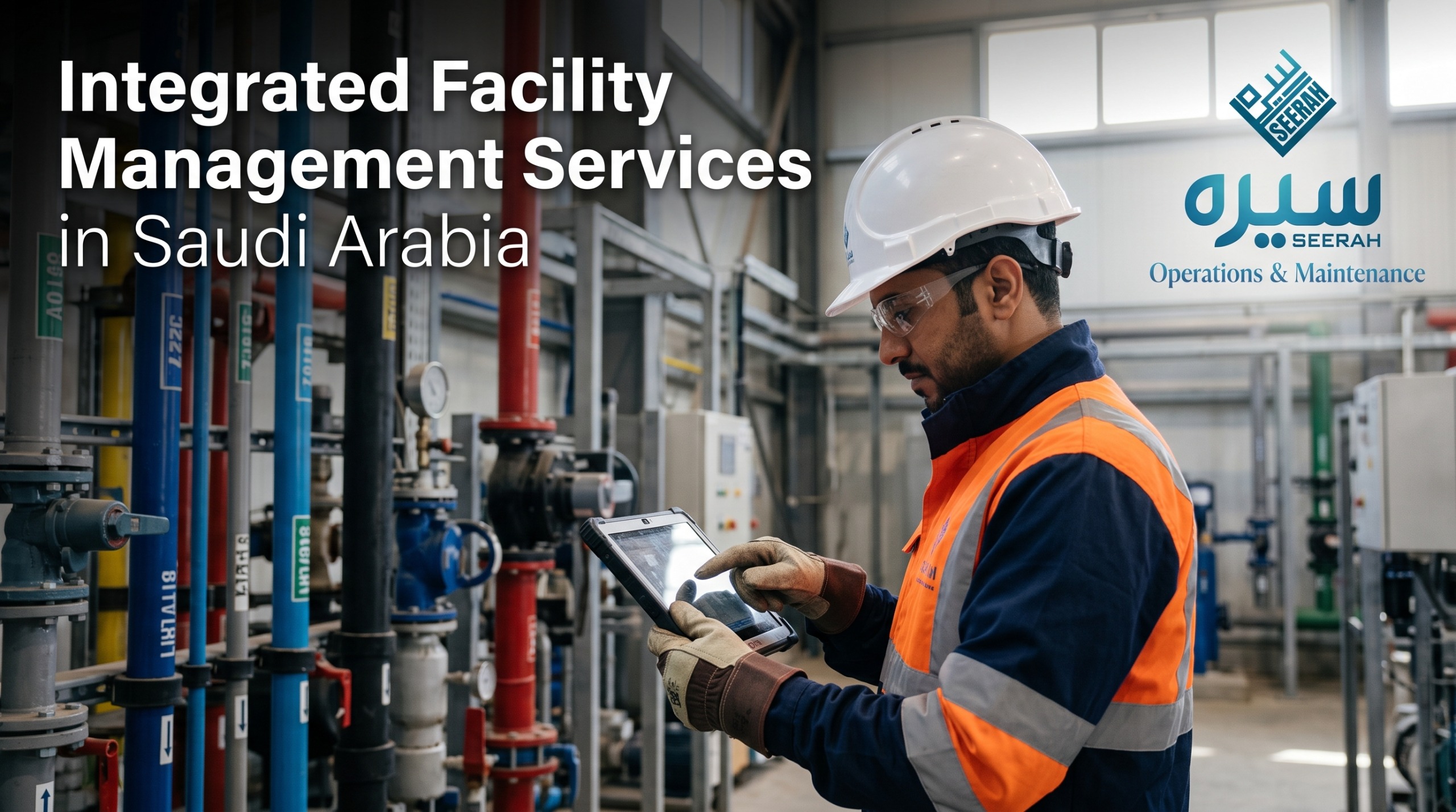
A modern commercial facility is a connected environment where technical equipment, building infrastructure, workforce resources, and operational systems must function together.

As Saudi Arabia invests in advanced commercial developments, industrial infrastructure, tourism destinations, and modern business environments, the responsibilities associated with managing these facilities are becoming increasingly complex.
Organizations need more than individual maintenance contractors. They require coordinated operational strategies that help maintain infrastructure reliability, improve resource utilization, and support business continuity.
This growing requirement highlights the importance of Integrated Facility Management Services in Saudi Arabia.
Companies such as Seerah support the Kingdom’s business sector by providing integrated facility management, operation and maintenance, and professional workforce solutions for commercial and industrial organizations.
Smart Buildings Require Smarter Facility Management
Modern buildings increasingly incorporate automated equipment, digital monitoring systems, and connected infrastructure.
These technologies can provide valuable operational information, but their effectiveness depends on appropriate maintenance and management.
For example, a building automation system may monitor cooling equipment, lighting controls, or other connected infrastructure. However, facility management personnel must still interpret the available information and coordinate necessary maintenance activities.
Integrated facility management helps connect technology with operational responsibilities.
By combining technical expertise, maintenance planning, and digital information, organizations can develop more structured approaches to managing modern buildings.
This creates opportunities for improved equipment visibility and more informed operational decisions.
Understanding Critical Infrastructure Within Commercial Facilities
Not every building component has the same operational importance.
Certain systems are essential to maintaining business activities, while others may have a lower immediate impact if temporarily unavailable.
Identifying critical infrastructure helps facility managers prioritize maintenance resources and establish appropriate operational procedures.
Examples of critical facility systems may include:
- Electrical distribution infrastructure.
- HVAC equipment serving essential operational areas.
- Water supply and pumping systems.
- Fire and life-safety equipment.
- Building communication infrastructure.
- Essential mechanical equipment.
- Backup power systems, where installed.
Each system requires maintenance according to its technical specifications and applicable requirements.
Professional facility management companies in Saudi Arabia help organizations coordinate technical maintenance activities within broader operational strategies.
Emergency Preparedness: An Essential Part of Facility Operations
Unexpected events can create significant challenges for commercial and industrial organizations.
Equipment failures, utility interruptions, water leakage, and other facility-related incidents may affect operational continuity.
An effective emergency preparedness strategy identifies potential risks and establishes appropriate response procedures.
Important Elements of Facility Emergency Planning
Risk Identification: Understanding which infrastructure failures could significantly affect business activities.
Defined Responsibilities: Establishing clear roles for facility personnel and relevant service providers.
Communication Procedures: Ensuring that operational issues are reported through appropriate channels.
Maintenance Readiness: Keeping essential equipment and maintenance information accessible.
Response Coordination: Organizing technical support according to the nature and urgency of the incident.
Integrated Facility Management Services in Saudi Arabia can support these activities through coordinated maintenance planning and operational oversight.
Seerah: Connecting Technical Services with Operational Support
Businesses managing complex infrastructure require access to technical expertise, suitable workforce resources, and dependable operational coordination.
Seerah Operation & Maintenance Co. provides integrated facility management and workforce solutions designed around the requirements of commercial and industrial organizations.
Its service capabilities include:
- Integrated Facility Management
- Operation and Maintenance Services
- Mechanical, Electrical, and Plumbing Maintenance
- HVAC and Technical Services
- Preventive and Corrective Maintenance
- Commercial Cleaning and Soft Services
- Skilled Manpower and Workforce Outsourcing
- Landscaping and Facility Support
- CAFM and Facility Technology Solutions
By bringing these capabilities together, Seerah supports businesses seeking coordinated approaches to facility operations.
Organizations interested in professional Integrated Facility Management Services in Saudi Arabia can explore Seerah’s business-focused service portfolio.
Lifecycle Cost Optimization: Looking Beyond Maintenance Expenses
Facility-related financial decisions should consider more than the immediate cost of individual repairs.
The total cost of operating an asset may include energy consumption, servicing, replacement components, workforce requirements, and eventual equipment replacement.
Lifecycle cost analysis helps organizations evaluate these expenses over an asset’s expected operating period.
For example, maintaining inefficient equipment may appear less expensive in the short term, but recurring repairs and excessive resource consumption can increase long-term expenditure.
Facility managers can use lifecycle information to support decisions about maintenance priorities, equipment upgrades, and future investment requirements.
This approach encourages organizations to consider long-term operational value rather than focusing exclusively on immediate maintenance costs.
Predictive Maintenance and the Future of Facility Operations
Traditional preventive maintenance follows established service schedules.
Predictive maintenance takes a different approach by using available equipment information to identify signs of potential deterioration.
Depending on the equipment and monitoring technology, relevant information may include temperature readings, vibration patterns, operating hours, and other performance indicators.
These insights can help maintenance teams investigate potential problems before equipment failure occurs.
However, predictive maintenance requires suitable monitoring systems, reliable data, and appropriate technical expertise.
As digital infrastructure becomes more common across Saudi Arabia, technology-supported maintenance strategies may provide additional opportunities for operational improvement.
Seerah’s broader facility management and technology-related service capabilities align with the increasing importance of coordinated maintenance and operational information.
Facility Management for Saudi Arabia’s Expanding Infrastructure
Saudi Arabia’s economic development is creating diverse requirements for professional facility operations.
Different business environments require maintenance strategies that reflect their infrastructure, operational schedules, and technical complexity.
Commercial Developments in Riyadh
Corporate towers, business centers, and mixed-use developments require coordinated building maintenance and operational support.
Industrial Infrastructure in the Eastern Province
Industrial and commercial facilities in Dammam, Khobar, and Jubail depend on technical reliability, maintenance planning, and skilled operational personnel.
Hospitality and Commercial Facilities in Jeddah
Jeddah’s business environment includes commercial properties, hospitality developments, and logistics infrastructure requiring professional facility support.
Emerging Tourism Destinations
Developments associated with Saudi Arabia’s expanding tourism sector highlight the importance of maintaining technical infrastructure, outdoor environments, and essential facility services.
Integrated facility management provides organizations with a coordinated approach to managing these different operational requirements.
Why Human Expertise Remains Essential in Digital Facility Management
Although automation and digital monitoring can improve access to operational information, skilled personnel remain essential to effective facility management.
Technical specialists interpret equipment conditions, conduct inspections, complete maintenance activities, and respond to operational requirements.
Facility supervisors coordinate resources, review service performance, and communicate with organizational management.
Cleaning teams and other support personnel contribute to the daily functionality of commercial environments.
Seerah’s combination of professional manpower solutions and integrated facility management supports the relationship between workforce expertise and effective building operations.
Technology can strengthen facility management, but successful service delivery continues to depend on qualified personnel and organized operational procedures.
Building a Resilient Facility Management Strategy
A resilient facility is one that can maintain essential functions and respond effectively when operational challenges arise.
Developing this capability requires organizations to connect several important activities.
These include identifying critical infrastructure, maintaining accurate equipment information, establishing appropriate maintenance procedures, coordinating workforce resources, and reviewing operational performance.
Integrated facility management helps bring these responsibilities together through a more structured service approach.
For organizations managing commercial and industrial properties, this can provide a stronger foundation for long-term infrastructure performance.
Conclusion
Saudi Arabia’s modern business infrastructure requires facility management strategies that combine technical knowledge, operational coordination, workforce expertise, and appropriate technology.
Integrated Facility Management Services in Saudi Arabia provide organizations with a comprehensive approach to maintaining essential infrastructure while supporting operational reliability and long-term asset performance.
From smart building management and emergency preparedness to lifecycle cost planning and technical maintenance, integrated solutions address the changing requirements of commercial and industrial environments.
Seerah Company contributes to this evolving sector through its integrated facility management, operation and maintenance, and professional workforce solutions.
For businesses seeking coordinated facility support, Seerah provides service capabilities designed around the operational needs of Saudi Arabia’s commercial and industrial sectors.
Visit Seerah: https://seerah.sa
Seerah Group | Workforce Solutions & Facility Management
 Authur